
The Future of Work: What AI Means for Jobs, Skills, and Organisations
Predictions about technology and the future of work have a poor track record. The mechanisation of agriculture was supposed to create mass unemployment; instead, it freed labour for industrial work that didn't yet exist. The automation of manufacturing was supposed to eliminate jobs; instead, it shifted employment toward services. The internet was supposed to make physical retail obsolete; it changed retail profoundly but didn't eliminate it.
This history should make us humble about confident predictions regarding AI and employment but it shouldn't make us complacent. The current wave of AI capability is genuinely different from previous automation waves in important ways, and the organisations and individuals that understand those differences will navigate the transition more successfully.
What Makes This Wave Different
Previous automation technologies were primarily good at replacing physical labour and rule-based cognitive tasks. Machines replaced humans in tasks that were physically demanding, repetitive, and could be defined by explicit rules. This created a pattern where automation displaced lower-skill, lower-wage work while increasing demand for higher-skill, higher-wage work.
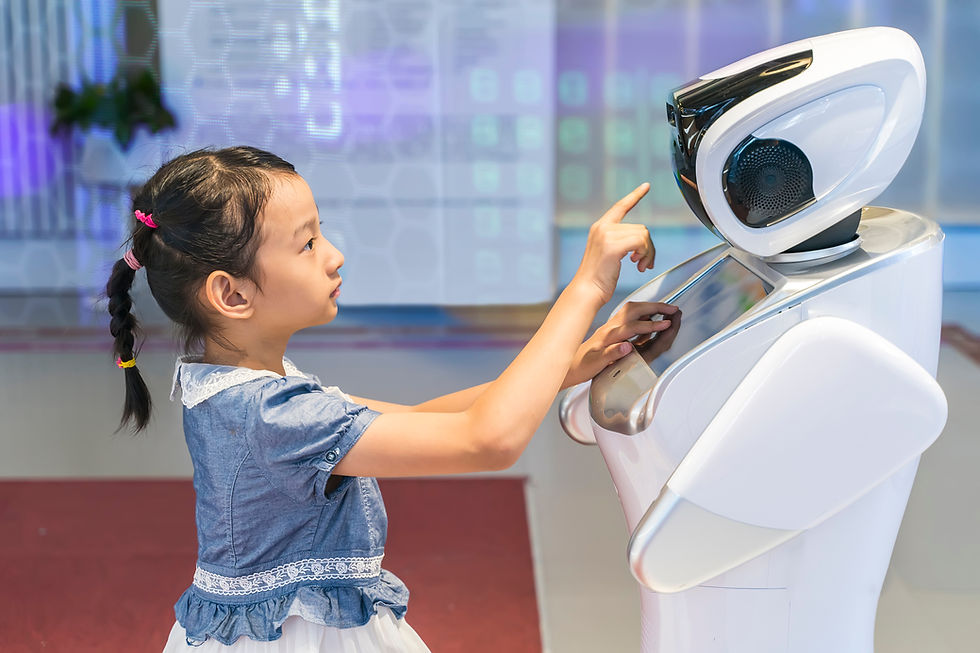
Current AI systems are different in that they're capable in domains that were previously considered distinctively human, such as language, creative work, complex reasoning, and professional judgement.
Large language models can write code, draft legal documents, produce marketing copy, and analyse financial data. Computer vision systems can interpret medical images, assess structural damage, and quality-check manufactured products.
This means the current wave of automation is not confined to lower-skill work. It's reaching into professional and knowledge work in ways that previous automation waves did not. That said, the nature of AI capability is important to understand clearly. Current AI systems are not generally intelligent. They're very good at specific, well-defined tasks, particularly tasks that involve pattern recognition in large datasets. They're currently poor at tasks requiring genuine understanding, novel reasoning, physical dexterity in unstructured environments, and interpersonal skills that depend on emotional intelligence.
The jobs currently most at risk are those that consist primarily of the tasks AI does well. The jobs most resilient to automation are those that consist primarily of the tasks AI does poorly. However, AI technology is advancing rapidly and there is genuine uncertainty about which roles will be AI proof longer-term.
The Task-Level Analysis
The most useful way to think about AI's impact on work is at the task level rather than the job level. Most jobs consist of a mix of tasks, some of which are more automatable than others. AI is likely to automate specific tasks within jobs rather than eliminating entire jobs, at least in the near term.
Consider a solicitor where tasks like document review, legal research, contract drafting, and case law analysis are all areas where AI tools are already demonstrating capability. These tasks currently consume a substantial portion of a junior solicitor's time. AI tools that perform these tasks effectively don't eliminate the solicitor's job, they change what the solicitor can spend their time on. They can spend more time on tasks such as building client relationships, strategic advice, courtroom advocacy, and ethical judgement.
The same analysis applies across a wide range of professional roles. Accountants, architects, engineers, doctors, and financial advisers, all have tasks within their roles that AI can assist with or automate, and tasks that remain distinctively human.
The implication is that the most valuable professional skill sets will increasingly combine domain expertise with the ability to work effectively with AI tools — directing them, evaluating their outputs critically, and applying human judgement to the questions they can't answer well.
The Skills That Will Matter
Several categories of skill are likely to become more valuable as AI capabilities expand:
Critical evaluation of AI outputs - As AI tools become more capable and more widely used, the ability to evaluate their outputs to identify errors, biases, and limitations, becomes increasingly important. This requires both domain expertise and an understanding of how AI systems work and where they're likely to fail.
Complex problem-solving and novel reasoning - AI systems perform well on problems that resemble their training data but may perform poorly on genuinely novel problems that require human centric reasoning. Human capacity for creative, adaptive problem-solving will remain valuable.
Interpersonal and relational skills - Empathy, trust-building, negotiation, leadership, and the ability to navigate complex human dynamics are areas where AI has no genuine capability. Roles that depend heavily on these skills including management, client-facing professional services, healthcare, education, and social work are more resilient to automation.
Ethical judgement and accountability - Decisions that carry significant ethical weight, that require weighing competing values, accounting for context, and taking responsibility for outcomes, need human judgement. As AI systems take on more decision-support roles, the humans who remain in the loop need to be capable of genuine ethical reasoning.
Technical AI literacy - Not everyone needs to be able to build AI systems, but understanding how they work, what they can and can't do, how to minimimse risks, and how to use them effectively, is becoming a baseline professional skill across many fields.
What Organisations Need to Do
Invest in workforce development - The organisations that navigate the AI transition most successfully will be those that invest in developing their existing workforce rather than simply replacing people with technology. This means identifying the skills that will be most valuable in an AI-augmented environment and building pathways for people to develop those and take on more value added work.
Redesign roles thoughtfully - As AI tools take on specific tasks, the remaining work in roles needs to be thoughtfully redesigned. Simply removing tasks from a role without considering the implications for workload, skill development, and career progression, is likely to create problems. The best outcomes should come from holistic role and organisational redesign.
Create genuine feedback mechanisms - The people closest to the work have the best understanding of where AI tools are helping, where they're creating problems, and what's being missed. Organisations that create genuine channels for this feedback, and act on it, will deploy AI more effectively than those that treat implementation as a top-down exercise.
Address the distributional question honestly - The benefits of AI-driven productivity improvements and the costs of displacement are not evenly distributed. Organisations have choices about how they manage this e.g. whether they share productivity gains with workers, invest in retraining, and support people through transitions. These choices have implications for trust, culture, and long-term organisational health.
The Individual Perspective
For individuals navigating their careers in an environment of rapid AI development, the most useful frame is probably not "will AI take my job?" but "which parts of my work are most valuable, and how do I develop those?"
The workers who are most resilient to automation tend to be those who can demonstrate skills that are difficult to automate including complex judgement, interpersonal skills, creative problem-solving, and those who are comfortable working with AI tools rather than competing against them.
Continuous learning is not a new requirement for career resilience, but the pace of change is accelerating. The professional who developed their skills in the 1990's and hasn't significantly updated them since is in a different position from the one who has been actively developing new capabilities throughout their career.
Embracing AI tools can support skill development by providing access to information, feedback, and practice opportunities that weren't previously available. The workers who use AI as a learning tool, rather than just a productivity tool, are likely to develop faster than those who don't.
Where To From Here?
The future of work in an AI-augmented world will be different from the present, and the pace of change will be faster than perhaps anyone is ready for.
Some jobs will change substantially; some will be eliminated; new ones will emerge that we can't fully anticipate. The transition will be uneven with some industries, some regions, and some demographic groups more affected than others.
The organisations and individuals that navigate this most successfully will be those that engage with the change openly and honestly, invest in adaptation, and seek to minimise risks.
The worst outcomes are likely to come from ignoring the change or catastrophising about it. The best are likely to come from thoughtful, proactive engagement with a genuinely complex transition.
Eagle SOS covers emerging technology, AI integration, and intelligent automation for Australian organisations. Visit our blog for more AI news and technology insights.


